Some careers offer a paycheck. Others offer a purpose. A career as a fire sprinkler technician gives you both. Every system you install or inspect is protecting real people in real buildings. Every code-compliant riser assembly, every correctly placed sprinkler head, every pressure test you run could be the difference between a fire that stays small and one that takes lives. That is not something you can say about most jobs, and it is exactly why this trade attracts people who want their work to matter.
If you have been asking yourself how to become a fire sprinkler technician, this guide has everything you need. From the educational foundation you will need to the certifications that open doors, this is a clear, practical breakdown of the path into one of the most stable and rewarding careers in the skilled trades. Read on and find out if this is the right fit for you.
What Does A Fire Sprinkler Technician Actually Do?
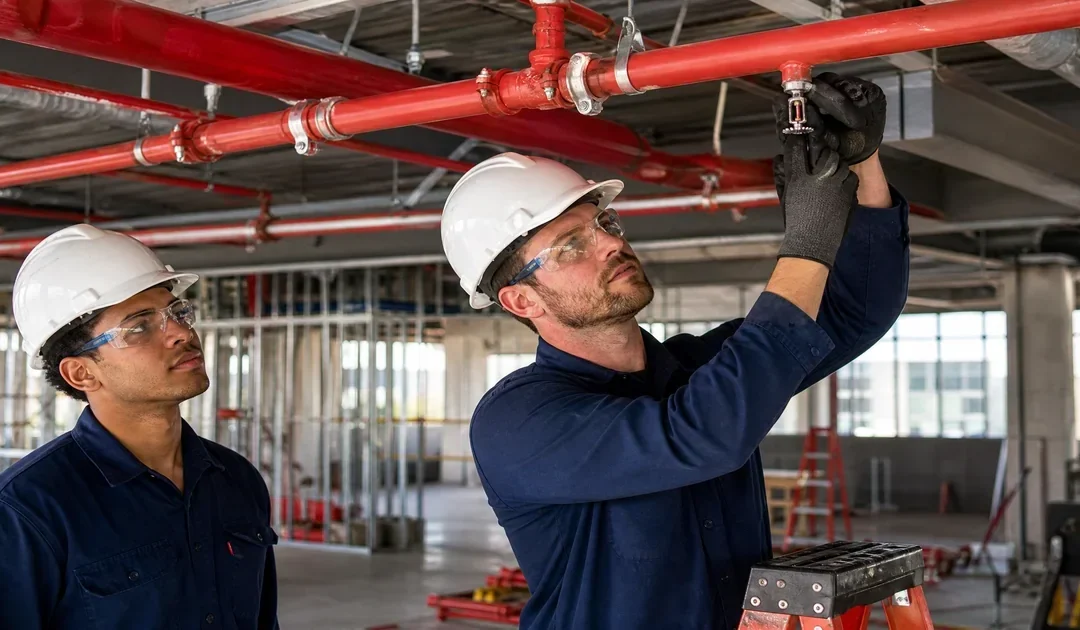
Before diving into the path, it helps to understand what the job looks like on a day-to-day basis. A fire sprinkler fitter installs, maintains, inspects, and repairs automatic fire suppression systems in residential, commercial, and industrial buildings. The work spans everything from reading blueprints and calculating hydraulic requirements to cutting and threading pipe, installing sprinkler heads, connecting water supplies, and testing completed systems. Fire sprinkler inspection services are a major part of what technicians handle regularly, and understanding the inspection process gives you a solid preview of the work involved.
The role also includes regulatory compliance and documentation. You will be working to NFPA standards, pulling permits, coordinating with AHJs (Authorities Having Jurisdiction), and maintaining detailed records of every inspection and installation. It is hands-on technical work that requires precision, physical ability, and a genuine commitment to getting things right.
Step 1: Start With The Right Educational Foundation
Learning to become a technician starts before you pick up your first wrench. A high school diploma or GED is the baseline requirement for entering the trade. While you are still in school, lean into courses in mathematics, physics, and technical drafting. These subjects lay the groundwork for the hydraulic calculations and system design work you will encounter throughout your career.
Some aspiring technicians also pursue postsecondary education in fire protection technology, fire science, or mechanical engineering technology. While a four-year degree in fire protection engineering is available and highly valued, it is not required to enter the trade. Many of the most skilled fire sprinkler fitters in the field entered through apprenticeship programs rather than college programs.
Step 2: Enter An Apprenticeship Program
The most reliable path for anyone figuring out how to become a fire sprinkler technician is a formal apprenticeship. The United Association (UA) of Plumbers, Fitters, Welders, and HVAC-R Service Techs offers the most widely recognized apprenticeship program for fire sprinkler fitters in the United States. These programs typically last five years and combine on-the-job training with classroom instruction.
During your apprenticeship, you will work under the direct supervision of experienced journeymen and master fitters. You will learn pipe fabrication and installation, sprinkler head selection and placement, system testing procedures, NFPA code requirements, and proper documentation practices. If you want to see what real fire sprinkler installation work looks like in practice, the Freedom Fire Protection team gives you a clear picture of the scope and quality of work in this field.
Step 3: Earn Your Certifications And Licenses
Certifications matter enormously in this trade. The National Institute for Certification in Engineering Technologies (NICET) offers a widely recognized certification program in fire protection engineering technology. NICET credentials are tiered from Level I through Level IV, with each level demonstrating increasing knowledge and experience. Many employers, particularly those bidding on larger commercial projects, require NICET certification as a condition of employment. Regular sprinkler system inspections are one of the core responsibilities that certified technicians handle, and the knowledge required for these inspections is exactly what certification programs validate.
In California, fire sprinkler contractors must hold a C-16 Fire Protection Contractor license issued by the California Contractors State License Board (CSLB). Individual technicians and fitters working on these projects are required to have appropriate trade certification, and continuing education is required to maintain credentials. If you are pursuing a career as a technician in California specifically, understanding the state licensing requirements is essential from day one.
Step 4: Build Your Experience And Advance Your Career
Once you have completed your apprenticeship and earned your initial certifications, the career path opens up in multiple directions. You can continue building your field expertise as a journeyman fitter, working on progressively more complex commercial and industrial projects. You can pursue NICET Level III and IV credentials to move into design and engineering roles. You can eventually pursue a contractor license and run your own projects or even your own company.
The fire protection industry is experiencing consistent growth as more buildings require sprinkler systems under updated codes and as existing systems age and need replacement or upgrading. For anyone who has been asking how to become a fire sprinkler technician, the demand for skilled professionals in this field is strong and shows no signs of slowing down.
Careers In Fire Protection Are Closer Than You Think
The path to becoming a fire sprinkler fitter is clear, well-supported, and leads to a career that genuinely matters. If you are ready to take the first step, start by researching apprenticeship programs in your area and reaching out to local fire protection companies to learn about entry-level opportunities.
Freedom Fire Protection has been building and supporting a skilled team of fire sprinkler professionals throughout Northern California since 2006. If you are exploring a career in the fire protection trade and want to understand how to become a fire sprinkler technician in the California market, their team can offer real insight into what the work involves and what the regional industry looks like. Reach out today to learn more.