
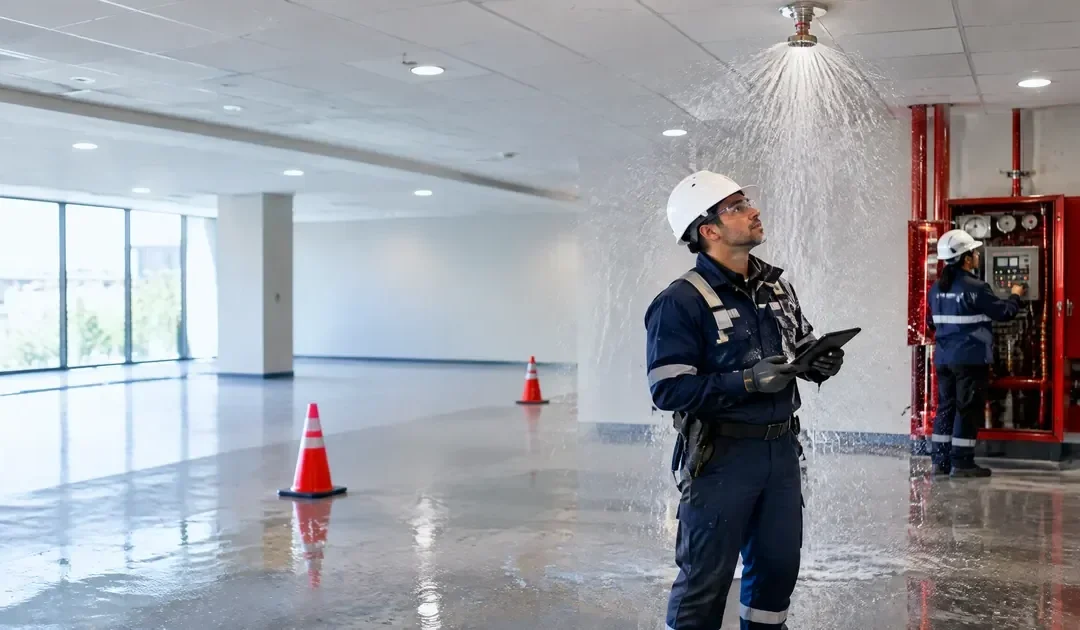
A fire sprinkler activates unexpectedly. Water is flooding the room. You have seconds to respond and no clear picture of what to do. Whether it was triggered by a genuine fire, an accidental impact, an extreme burst of steam, or a manufacturing defect, an activated sprinkler head can release a significant volume of water in a very short time. Knowing how to stop a fire sprinkler head from spraying before it ever happens could save you tens of thousands of dollars in water damage.
This guide walks you through the two methods available for stopping an activated sprinkler head, when to use each one, the immediate actions to take after the flow stops, and what happens next in terms of system restoration and professional follow-up. This information is worth knowing before you ever need it. So keep reading because one day, it might matter.
First: Understand What You Are Dealing With
A fire sprinkler head discharges water at between 13 and 26 gallons per minute for residential quick-response heads, and potentially much higher for commercial standard-response heads. That is a bathtub worth of water in under a minute from a single head. Every second you take to figure out your next move adds to the water damage in the room.
Accidental discharges are more common than most people realize. Hanging items from sprinkler heads, bumping them during moving or construction work, exposure to extreme heat sources like steam or direct flame that falls short of a real fire, or simple manufacturing defects can all cause an unintended activation. Knowing how to stop a fire sprinkler head from spraying in advance means you do not spend those critical first seconds searching for options.
Method 1: Close The Control Valve
The most straightforward method to stop an activated sprinkler is to close the control valve that supplies water to the affected zone or to the entire system. Control valves are typically located in the riser room, a mechanical room, or a utility area. OS&Y (Outside Stem and Yoke) valves show their status visually: stem extended means open, stem retracted means closed. Butterfly valves are closed by rotating the handle perpendicular to the direction of flow.
Turn the valve clockwise to close it. This stops water from entering the pipe network and, within moments, stops the flow from the activated head. However, water already in the pipes above the head will continue to drain until the system fully empties, so flow does not stop immediately.
There is a critical drawback to this approach: closing the control valve impairs the entire sprinkler system or zone. That means the rest of the building or the affected zone loses fire protection for the duration of the shutdown. NFPA standards treat a system with a closed control valve as an impairment, which triggers notification requirements to your insurance carrier and local fire authority. Still, when a genuine emergency is happening, this is a reliable and always-available option.
Method 2: Use A Sprinkler Stopper Tool
A faster and less disruptive option is a sprinkler stopper, the most widely known brand being the Shutgun. These spring-loaded tools are designed to seal the outlet of an activated sprinkler head without requiring you to find and operate the control valve. The tool uses a rubber seal to block the sprinkler’s water outlet directly. When applied correctly, it stops the flow in seconds while keeping the rest of the system fully charged and operational.
Different head types require different tool models. Pendent, upright, and horizontal sidewall heads typically use a standard Shutgun model designed for the common half-inch orifice. Concealed heads require a specific concealed version. It is important to match the tool to the head type, which is why anyone responsible for a building should confirm in advance which tool fits which heads in their system.
Sprinkler stopper tools should be kept in fire extinguisher cabinets, maintenance carts, or designated spots on each floor. Having them positioned where building personnel can grab them immediately is what makes the how to stop a fire sprinkler head from spraying response actually quick. A tool stored in a locked storage room two floors away does not help when water is spreading fast.
Immediately After Stopping The Flow
Once the water is stopped, take stock of the situation. If the sprinkler activated in response to a genuine fire, do not assume the fire is out just because the water stopped. Evacuate if needed, call 911, and let emergency responders assess the situation. Do not reopen valves or restore the system until the fire department clears the area.
If the activation was accidental, contain the water damage by moving valuables, documenting everything with photos, and beginning water extraction as quickly as possible. Then call a licensed fire sprinkler contractor immediately. A sprinkler stopper is a short-term solution only. The activated head must be replaced and the system restored to operational status by a professional before it can be considered fully functional again. The contractor will also perform a drain-down, head replacement, and system recharge with a pressure test to confirm everything is working correctly.
Know Your Plan Before You Need It
The best time to understand how to stop a fire sprinkler head from spraying is well before you are standing in a flooding room trying to figure it out. Identify the control valve locations in your building. Make sure a sprinkler stopper tool is accessible on every floor. Train building staff on the location of both the valves and the tools, and confirm who in the organization is responsible for each step of the response.
Freedom Fire Protection provides professional fire sprinkler inspections, repairs, and maintenance throughout Northern California. If you have questions about your system’s valve locations, whether a stopper tool is appropriate for your head types, or how to respond to an accidental discharge, our licensed team can walk you through every detail.
Contact us today to make sure you are prepared.