
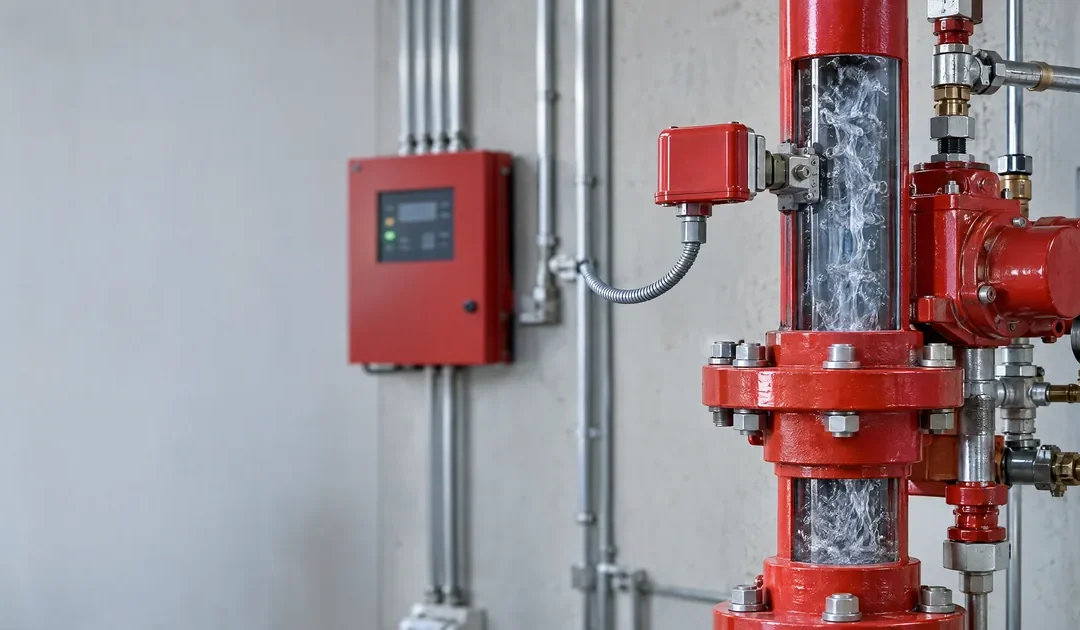
Most people know that fire sprinkler systems save lives. But what keeps you informed when the system actually activates? That is where the water flow switch sensor comes in. It is one of the most important yet least talked-about components in any fire sprinkler system, and understanding its role helps you appreciate just how much goes into keeping your property safe.
If you have ever wondered what triggers the alarm when a sprinkler head goes off, or how a monitoring station gets notified before anyone even makes a call, a water flow switch sensor is a big part of that answer. Let’s walk through what it does, how it works, and why it matters for your building’s protection.
What Is a Water Flow Switch Sensor?
A water flow switch sensor, also called a water flow detector, is an electro-mechanical device installed on the piping of a fire sprinkler system. Its job is to detect when water is flowing through the pipes, which typically signals one of two things: a sprinkler head has activated in response to heat, or there is an unexpected leak somewhere in the system.
When the sensor detects continuous water flow, it sends an electrical signal to the building’s fire alarm panel. That panel can then trigger local alarms, notify a central monitoring station, and alert the fire department. This is what is known as a water flow alarm, and it plays a critical role in rapid emergency response. For a related detection component, read about the role of a tamper switch in fire protection.
How Does a Flow Switch Work?
A flow switch fire sprinkler device typically works using a paddle or vane. This paddle is inserted into the sprinkler pipe through a small opening. When water moves through the pipe at a sufficient rate, usually above 10 gallons per minute, it pushes the paddle. That movement activates a switch, which sends the alarm signal to the connected panel.
To prevent false alarms from normal pressure fluctuations in the water supply, most water flow switch sensors include a built-in delay mechanism. This delay can typically be set between 0 and 90 seconds. It ensures that a brief surge in water pressure does not trigger an alarm unnecessarily. Once the flow drops below the threshold, the switch resets automatically.
Where Should a Flow Switch Be Installed?
A sprinkler flow switch should be mounted six to seven feet above the ground on the sprinkler pipe. On a horizontal pipe, it is positioned at the top to prevent debris or rust from interfering with the paddle. On a vertical pipe, it should be placed where water flows upward. The device must also be installed at least six inches away from any fittings that change the direction of water flow, and at least two feet from a drain or valve. A qualified installer can assess how this fits your fire sprinkler installation.
Proper placement ensures the device reads water flow accurately and avoids interference from nearby components. The electrical components of most flow switches can be replaced without draining the system, which is convenient during maintenance.
Why Does This Component Matter?
Without a functioning water flow switch sensor, your fire sprinkler system has no way to communicate that it has activated. The sprinkler might suppress a fire, but no one is alerted in real time. Monitoring stations cannot dispatch help. The fire department may not arrive until someone calls. That delay can cost lives and lead to far greater property damage.
Regular inspection of the flow switch is also essential. Like any mechanical component, it can wear down over time. A qualified fire protection contractor should check it during annual inspections and replace a faulty unit immediately. Learn more about fire sprinkler inspection services.
Let Your System Communicate When It Counts
A water flow switch sensor is the voice of your sprinkler system. It tells the world that something is happening inside your building. At Freedom Fire Protection, our fire sprinkler inspection services include thorough evaluation of every component, from the pipes to the flow switches.
Use our contact page today to make sure your system is fully prepared to respond when it counts.