There are trades, and then there are trades that actually matter. A career as a fire sprinkler fitter sits firmly in the second category. Every system you install or maintain is protecting real people in real buildings, whether that is a family asleep in a new home in Modesto or a warehouse full of employees in Stockton. The work is skilled, the pay is competitive, the benefits are strong, and the demand for qualified professionals keeps growing as more California buildings come under mandatory fire sprinkler requirements.
If you have been asking yourself how to become a fire sprinkler fitter, this guide is your starting point. From the basics of getting into the trade to the certifications and licensing that define a successful long-term career in fire protection, here is what you need to know to take this path seriously and get started on the right foot.
What Does A Fire Sprinkler Fitter Actually Do?
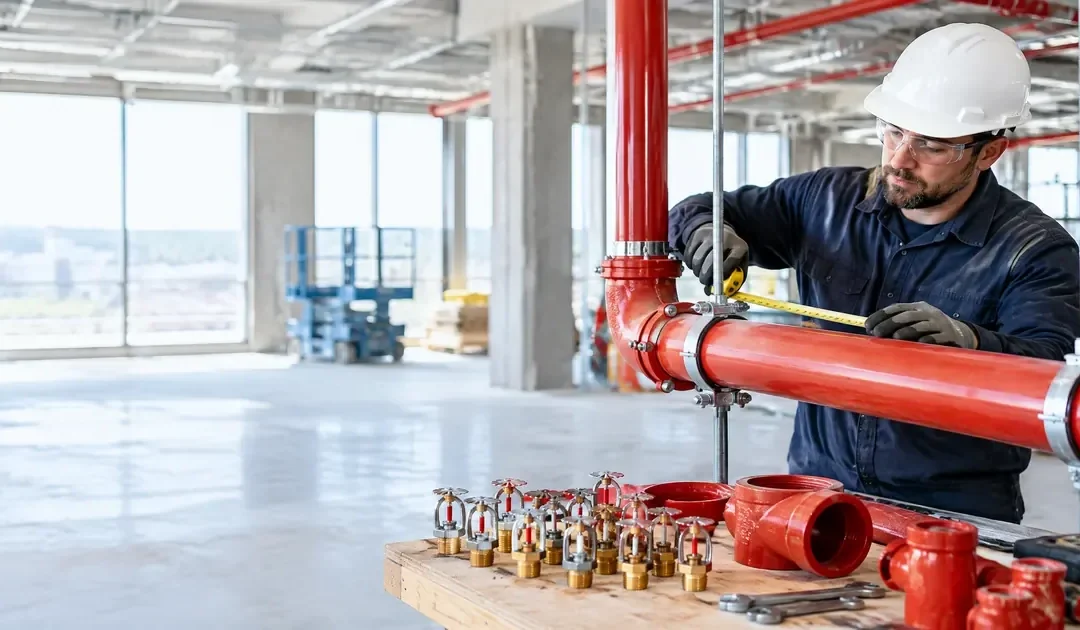
Before answering how you can become one, it helps to understand the full scope of what the role involves. Sprinkler fitters are pipefitting specialists in fire protection. They install, test, inspect, maintain, and repair automatic fire sprinkler systems, standpipes, fire pumps, and a range of other fire suppression equipment in residential, commercial, and industrial buildings.
The work takes you to job sites of all types and sizes. You might be working on a new home subdivision one week and a multi-story office building the next. Some projects involve underground piping systems. Others require working at heights of 100 feet or more. You read blueprints, perform hydraulic calculations, cut and thread pipe, hang hangers, install sprinkler heads, test systems, and document everything according to NFPA standards. It is demanding, skilled work that requires both physical fitness and technical precision.
Step 1: Build The Right Foundation
Understanding how to become a fire sprinkler fitter starts before you set foot on a job site. A high school diploma or GED is the baseline requirement for entering any apprenticeship program. While still in school, take courses in mathematics, physics, and any available technical or vocational programs. These subjects directly support the hydraulic calculation work and system design reading you will encounter throughout your career.
You must be at least 18 years old to apply for a sprinkler fitter apprenticeship. Physical fitness is also an important consideration, as the work involves significant lifting, climbing, and working in confined spaces and at height. Coming in physically prepared makes the transition into the trade much smoother.
Step 2: Enter A UA Apprenticeship Program
The United Association (UA) of Plumbers, Fitters, Welders, and HVAC-R Service Techs sponsors the most widely recognized sprinkler fitter apprenticeship programs in the United States, including in California. UA apprenticeships are five-year registered programs that combine paid on-the-job training with related classroom instruction.
From day one as a UA apprentice, you earn a competitive wage, a percentage of the journeyman rate that increases every six months as you progress through the program. You are working on real job sites under the supervision of experienced journeyman fitters, building skills in pipe fabrication, system layout, NFPA code compliance, and installation of all major system types. In California, sprinkler fitter apprenticeships are available through several UA locals, including Local 709 in Southern California.
This earn-while-you-learn structure is one of the most compelling aspects of the job through the union pathway. There is no student debt, no gap year, and no waiting to start earning while you build your professional foundation.
Step 3: Earn Industry Certifications
As you progress through your apprenticeship and into journeyman work, certifications become increasingly important for career advancement. The National Institute for Certification in Engineering Technologies (NICET) offers a widely respected certification program in fire protection engineering technology, with four levels that reflect increasing knowledge and experience. Many employers and project owners require NICET certification for designers and project leads on commercial fire protection work.
The American Fire Sprinkler Association (AFSA) also offers training programs and certifications that are well recognized in the California market. In California specifically, all fire sprinkler contracting work requires a C-16 Fire Protection Contractor license from the California Contractors State License Board. Understanding the licensing landscape in your state is an important part of mapping your long-term career as a fire sprinkler fitter.
Step 4: Grow Your Career Over Time
Once you complete your apprenticeship and earn your journeyman credentials, the career opportunities branch out significantly. You can continue building field experience on increasingly complex commercial and industrial projects. You can pursue NICET Level III and IV credentials and move into design and project engineering roles. With the right experience and licensing, you can eventually run your own projects or start your own fire protection company.
The fire protection industry continues to grow as California’s building codes expand sprinkler requirements and as existing systems across the state age and require upgrading. For anyone exploring how to become a fire sprinkler fitter in Northern California, the regional demand for skilled professionals is strong and consistent.
Start Your Career In Fire Protection
Learning how to become a fire sprinkler fitter is the first step. The next one is connecting with a fire protection company or union local that can help you start building real experience in the field. If you are drawn to the inspection side of the trade, our guide on how to become a fire sprinkler technician walks through that related career path in detail.
Freedom Fire Protection has been building a skilled team of fire protection professionals throughout Northern California since 2006. If you want to understand what a career in this trade looks like from the inside, or if you are exploring fire sprinkler fitter opportunities in the region, reaching out to our team is a great starting point.
Contact us today to learn more.